Katherine’s grief after Prince Henry’s death
The Constant PrincessKatherine’s grief after the death of her infant son, Prince Henry, is a profound rupture in the faith and confidence that have sustained her as queen. The loss makes her question divine providence, her capacity to endure sorrow, and even her desire to live and rule. With Margaret Pole’s steady companionship, she slowly emerges from isolation; grief remains, but it no longer prevents her from imagining happiness or another child.
The promise of queenship and the shock of loss
At her coronation on 24 June 1509, Katherine understood her anointing as the fulfillment of a destiny: she was an English queen, chosen by God and placed under His protection. The ceremony gave sacred meaning to her public role and to her expectation that she would help secure the kingdom’s future. The death of her son tests that confidence at its most intimate point. A royal hope tied to succession and national security is also the life of a child she loves.
The loss follows an earlier pregnancy tragedy. In January 1510, Katherine miscarried a baby girl, whom she had associated with the name Mary and with a promise to Arthur. At that time, she grieved and feared that she had failed her family and the kingdoms connected to her marriage. The later death of her son is distinct, but it falls upon a woman already acquainted with the private sorrow and public expectations surrounding pregnancy. It does not simply repeat the earlier loss: Katherine calls this grief worse even than Arthur’s death and the years she spent widowed.
The news and withdrawal
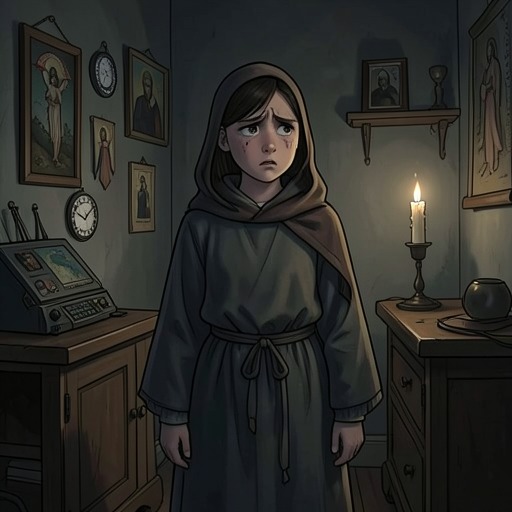
On 22 February 1511, after a period of happiness, Katherine receives the news that her baby is dead. She retreats to her room, orders the shutters closed and the doors bolted, and cannot bear either daylight or the sound of ordinary life continuing outside. A page’s laughter in the garden becomes unbearable not because it has changed, but because it sharply conflicts with her sense that joy has disappeared from the world. The closed room gives physical form to a grief that she cannot keep outside herself.
The loss also unsettles her religious understanding. Katherine had believed that God would protect her and that her life followed a providential path. In the first shock, that assurance collapses: she cannot reconcile the death of an innocent child with a merciful God, and she loses both her desire to live and her ambition to rule England. She sees her suffering alongside losses in her family, including her mother’s grief and Juana’s bereavement, and fears that she is not, after all, stronger than the women before her. The child’s death thus becomes more than a private bereavement; it breaks the story of divine protection by which she had interpreted her endurance.
Margaret Pole as witness and companion
Margaret Pole enters Katherine’s room without invitation. Having been responsible for the dead child’s nursery, she asks Katherine’s pardon although she acknowledges that she did nothing wrong. Her gesture does not offer an explanation for the death; instead, it makes room for a grief shared by those who cared for the child. Katherine recognizes that the loss is not hers alone and leans forward into Margaret’s embrace. Their friendship shifts the scene from solitary mourning toward mutual recognition.
Margaret does not promise that Katherine will soon stop grieving. She tells her that she will learn to bear the loss, recalling the sorrow Katherine survived at Ludlow and insisting that grief need not destroy her. Her counsel offers a different measure of courage from the queen’s earlier confidence that God would prevent catastrophe: endurance now means living through what cannot be undone. Katherine asks Margaret to teach her courage again, and Margaret answers that Katherine has learned it already. The older woman’s presence supplies no answer to Katherine’s question about why the child died, but it gives her a human witness while she cannot yet imagine a future.
A gradual return to hope
By summer 1511, Katherine can acknowledge that no one was to blame for her son’s death. She believes there was no neglect, rejects the idea that the loss was punishment for sin, and accepts that she may never know why it happened. This is not a return to the untroubled certainty she had before: her faith remains firm, but her confidence in her parents’ judgment has been damaged, and she has come to question whether they could have been wrong. Her religious conviction survives in a changed form, no longer dependent on treating every sorrow as evidence of divine purpose.
Her recovery appears first in a small return of laughter. After a fool’s jest, she realizes that happiness and hope may again be possible and that she might one day conceive another child. She describes herself as alive again, poised between her past and future, while conceding that she may never reconcile herself to her son’s death. The distinction matters: renewed hope does not erase the bereavement or explain it away. It marks a change in what Katherine can imagine for herself.
Later, when Henry VIII prepares to sail for France, he appoints Katherine regent, governor of the realm, and captain general of the forces responsible for home defense. This transfer of authority shows her public role continuing beyond the period of personal devastation. The contrast with the moment when she believed she had lost all ambition to rule is striking, but the account does not present her office as a cure for grief. Her mourning and her queenship remain bound together: the same life once shaped by dynastic expectation must make room for a loss that neither rank nor rule can prevent.